
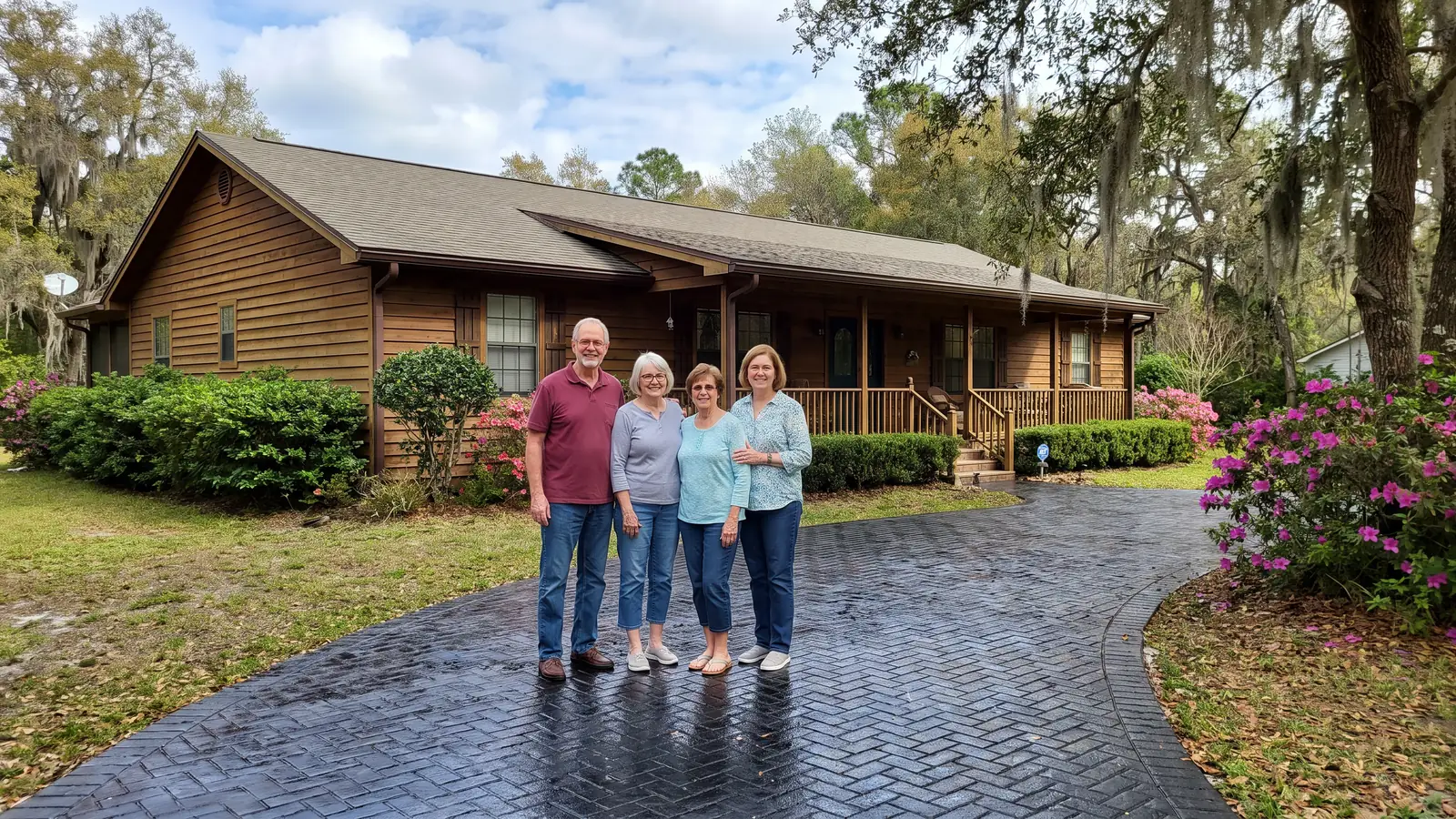
Paver sealing for Argyle Forest homes
Paver Sealing in Argyle Forest, FL
Argyle Forest's pools, lakes and HOAs shape sealing, so call (904) 299-8891 for a free estimate that fits your street.
- Brings out deeper paver color
- Fresh joint sand helps lock pavers in place
- Gives weeds less room to grow
- Makes the surface easier to keep clean
- Free estimate, no obligation
Request a Free Estimate
Free, no obligation.
Fast, careful paver sealing in Argyle Forest
Paver sealing in Argyle Forest reaches condo owners and homeowners from Argyle East Village to Plum Tree and Chimney Lakes. A local contractor cleans, re-sands and seals drives, pool decks and walkways, starting with a free estimate. Tap ask for a free estimate, and a reply should reach you within 1 business day, usually much sooner.
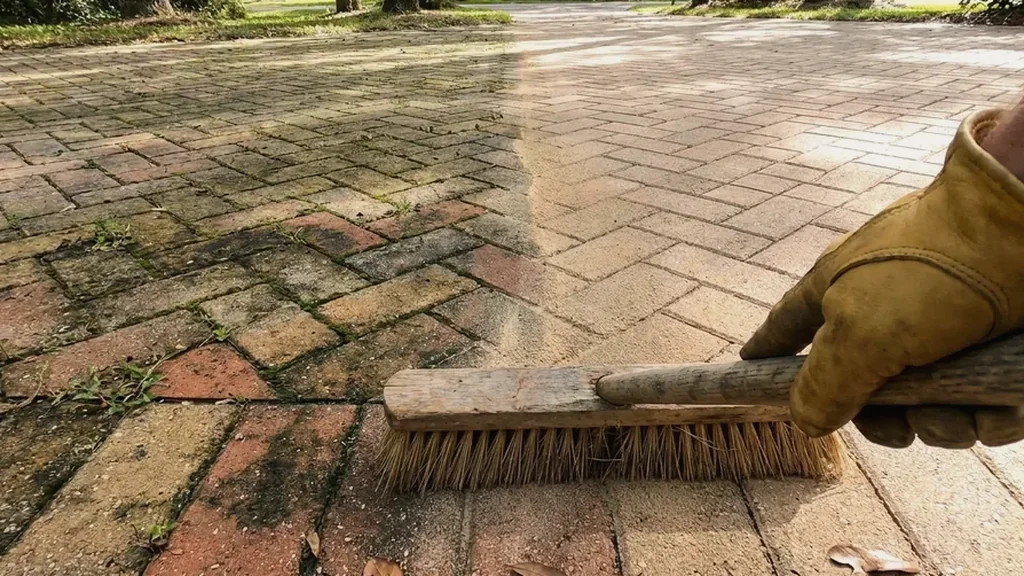
Picture the pool deck on a bright afternoon. The stone has gone chalky, a green film hugs the edge by the water, and sand has left the joints. A wash, fresh sand and the right sealer bring back an even color. To talk it through, call (904) 299-8891.
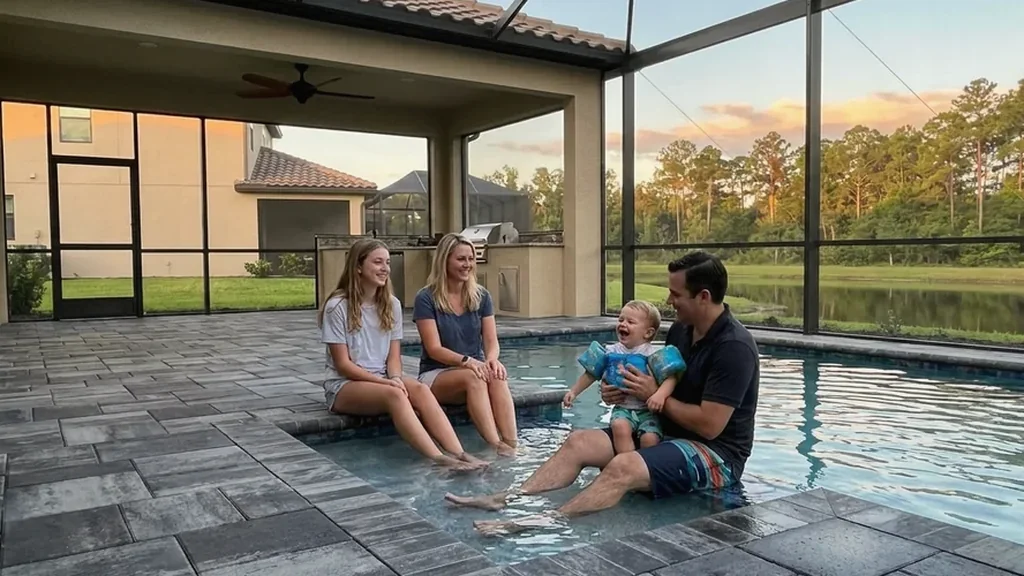
Why hire a local paver sealing contractor in Argyle Forest?
Argyle Forest was planned as a set of villages, so pavers here sit in communities with their own rules, pools and small lakes. To hear how that applies on your street, call (904) 299-8891.
Free measure and price
Your drive, pool deck and walkways are measured at no charge. A price arrives before any decision.
A published rate
Argyle Forest bids can be tested against the posted Northeast Florida figure of $1.75 to $3.25 per square foot.
A rules-friendly finish
A natural matte finish is the easier one to defend with an association. A wet look may draw questions.
Your decision
The date, the finish and the answer stay yours. An Argyle Forest estimate has no strings attached.
Get Your Free Estimate in Argyle Forest
Tell us about your pavers in Argyle Forest.
Free, no obligation
What paver problems show up most in Argyle Forest?
Pool decks that need grip as well as color
A pool is reported on many Argyle Forest listings, so pool decks are common here. A Jacksonville cost guide says film-forming sealers can trap moisture and create slip hazards, which is why most Jacksonville pool decks get a penetrating sealer that keeps traction when wet. The right product depends on the old coat too. Raise traction at the first visit, before you choose a finish. A deck that feels slick when wet is worth mentioning at the estimate, even if it looks fine. The old coat decides which product can go on.
Ground where water sits near the surface
The USDA describes the Pottsburg series, first described in Duval County, as somewhat poorly drained fine sand on flats with a seasonal high water table 0 to 24 inches deep. That is county soil, not an Argyle Forest survey, but it shows how wet ground can be here. Wet ground lets pavers settle and joint sand slump. Sunken areas are reset before sealing, since sealer would preserve the dip. Walk the patio after a storm and note where puddles linger, since that is where a settled paver tends to hide. Settled joints near the lake side are worth pointing out.
Pavers from the 1980s and 1990s
Homes on the Argyle Forest tax roll were built from 1981 to 2003, with a median around 1990. Chimney Lakes dates from 1986 to 2005 and Candlewood from 1979. Pavers added since then came from many owners and many contractors, which means nobody may know what is on them. A water-based product cannot go over a solvent-based coat, so the old coat has to be identified. Receipts, HOA records or a past owner can sometimes answer the question in minutes. Pavers laid by a builder may differ from ones added later by an owner.
Green film beside the water
Some Plum Tree homesites back onto small internal lakes, and Chimney Lakes and other communities have ponds and parks. Algae like wet conditions and spread faster in shade where the air barely moves. A paver walkway near the water that stays shaded is the likeliest to turn green. Expect extra washing time where the stone never dries out. Keeping sprinkler spray and leaf litter off the stone helps the surface dry between rains. Morning shade on the north side can be enough to hold dew all day.
Condo courtyards and shared walks
Condos make up a real share of Argyle Forest housing, with units on Argyle Business Loop. A Jacksonville paver page says gates and shared areas can limit contractor access. That means entry walks and courtyards may need a call to the association before work starts. Small areas also cost more per foot, so ask about minimums. Ask your property manager whether the association keeps a list of approved contractors or finishes. Condo rules can also set the days and hours when work may happen.
Do Plum Tree, Chimney Lakes and Argyle Corners each need their own paver plan?
Each has its own details, though the sealing steps are the same. Argyle Forest sits between Blanding Boulevard and Branan Field-Chaffee Road along the Duval and Clay county line. It began as a planned development in 1975, and homes in the area date from 1981 to 2003 with a median around 1990. Tell the contractor your community when you ask for a free estimate.
Plum Tree is an established single-family neighborhood off 103rd Street, with some homesites backing onto small internal lakes and a homeowners association. Chimney Lakes homes were built from 1986 to 2005, and Candlewood, Bishopwood and Heather Ridge have homes from the late 1970s and 1980s. Pavers near water may stay damp longer, so call (904) 299-8891 and say if yours back onto a lake. That detail shapes how long the wash takes.
Many Argyle Forest homes belong to an HOA. Under Florida law, an association's review stays within what its declaration or published guidelines state or reasonably imply. One page from a Jacksonville paver company says a plain natural look may be treated as routine upkeep, whereas a glossy finish is more likely to need approval. Read your papers, then ask for a free estimate.
What does paver sealing cost in Argyle Forest?
Argyle Forest jobs range from a condo entry walk to a full pool deck, so price follows square footage. Rates published in Northeast Florida run $1.75 to $3.25 per square foot to clean, sand and seal. A small condo area costs more per foot, while a pool deck and drive together earn a better rate. To get a number for your layout, ask for a free estimate, and the visit is free.
A pool deck may need a different product, which can change the price. Strip and reseal also costs more when an old coat has failed. Gates and shared areas can limit access and add time. Call (904) 299-8891 to learn which of these apply to you.
| Paved area | Typical example | Clean, sand and seal |
|---|---|---|
| 300 sq ft | Small patio or walkway | $525 to $975 |
| 600 sq ft | Two car driveway | $1,050 to $1,950 |
| 1,000 sq ft | Large driveway or pool deck | $1,750 to $3,250 |
| 1,500 sq ft | Driveway plus pool deck | $2,625 to $4,875 |
Math based on the $1.75 to $3.25 per square foot that Northeast Florida paver companies publish. Your contractor sets the actual price after seeing the surface. Repairs, leveling and stripping failed sealer are usually extra.
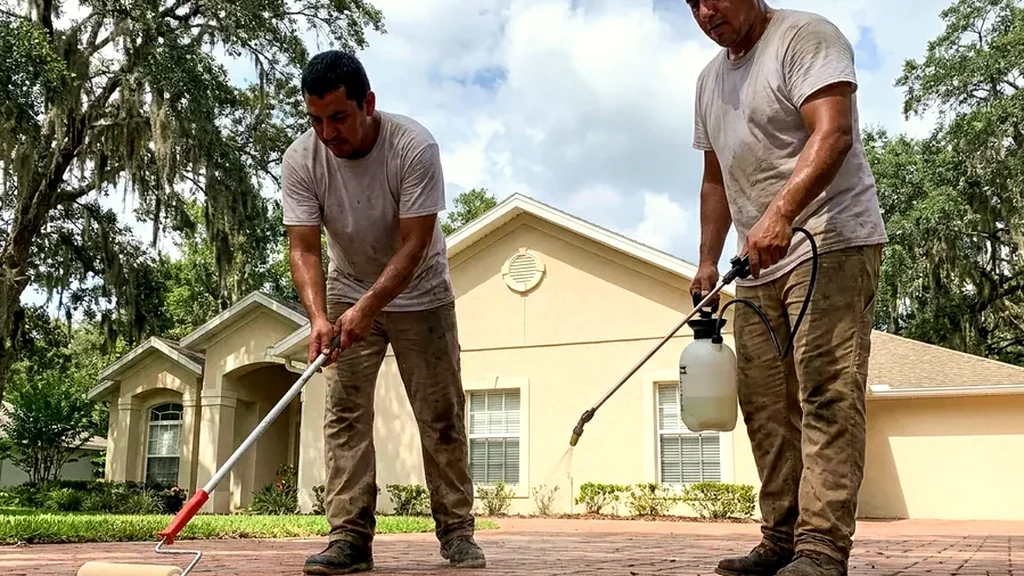
How does a paver sealing job work in Argyle Forest?
Check the surfaces and the old coat
The contractor looks at your Argyle Forest drive, pool deck and walkways and measures each. Spots that have sunk or lifted are flagged for repair before any coat. Any earlier sealer has to be identified, since water-based sealer cannot go over solvent-based sealer. If you are in an HOA, share the finish rules at this visit. A short walk around the pool and the lake side shows which areas are shaded.
Wash away film, chalk and stains
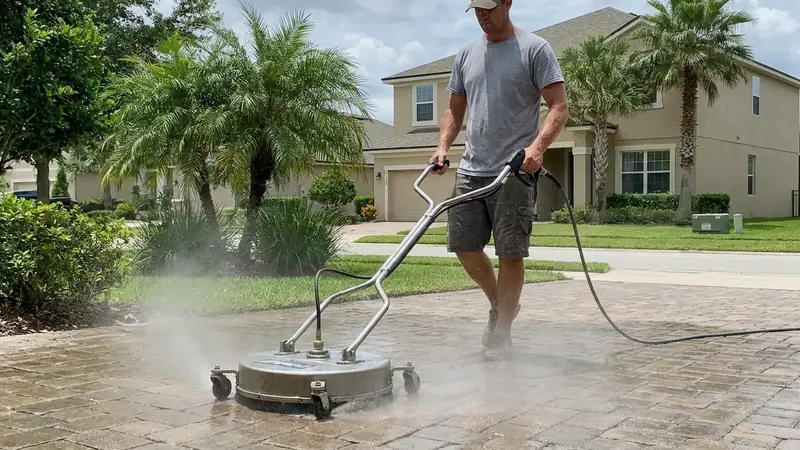
Cleaning lifts green film, dirt and the chalky look from sun-faded stone. Rust and oil marks are treated now, because sealer would lock them in. Pool water, plants and lake edges are kept clear of runoff. A deck beside the water may need a second pass in the shaded corners. Pressure is kept moderate so the joints are not blown out while the dirt comes off. Chalky stone often brightens a lot after a good wash, which is what you see first.
Put sand back and sweep clean
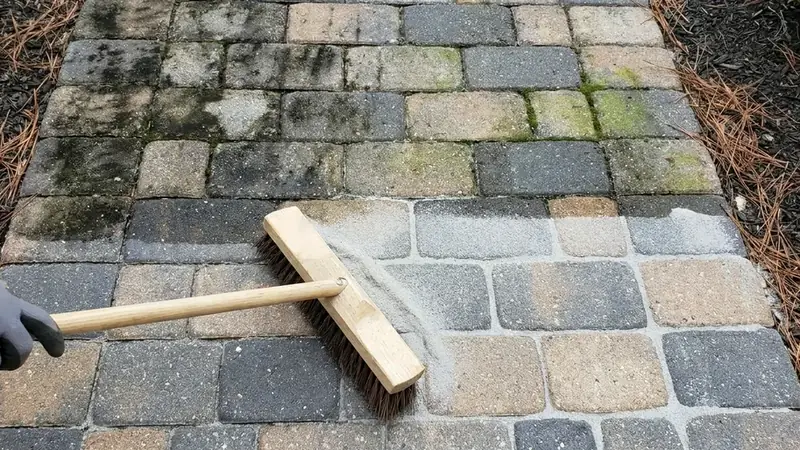
Once the stone is washed, the joints are refilled with sand before sealing. On wet ground, joints settle and empty faster. Full joints hold pavers tight and slow weeds, and one Jacksonville company says sealing cuts back weeds and ants. A sweep clears the surface before the next step. Edges near the pool coping and downspouts often take the most sand. The sand is chosen to match the joint width of your pavers.
Let the stone dry out
Drying time is built into the plan. A deck near the pool or a lake edge can stay damp after the drive has dried. The contractor checks the forecast and touches the stone before any coat goes on. If rain is close, the date moves, and a Jacksonville page puts the wait at 24 to 48 hours after cleaning.
Seal in the finish you chose
The sealer is sprayed and then back-rolled for an even coat, in the finish you picked and the type that fits a pool deck or drive. Feet can go back on in a few hours, and cars should wait about a day. Companies commonly quote a two to five year gap before the next coat. Keep pets and children off the surface until the contractor clears it. Ask for the product name, so the next coat matches the one on your stone. A splash of water after the coat cures shows whether it beads.
Complete paver services in Argyle Forest
Argyle Forest work goes in order. The wash removes film and stains, new sand fills the joints, the surface dries, and then sealer goes on so no dirt sits beneath it. Pool decks and drives follow the same path. To ask how each step would go on your property, call (904) 299-8891.
Driveways carry tires, pool decks get sun and splash, and walkways see daily steps. Condo courtyards and entry walks are smaller but still count. Each surface is looked at on its own, because each wears differently. To list what you have, ask for a free estimate.
Product type matters most on a pool deck. Film-forming sealers add gloss, while penetrating ones add none and are the usual pick for traction. Either type is water-based or solvent-based, and water-based never goes over solvent-based. For help choosing, call (904) 299-8891.
Dates here depend on the weather and on your association. Jacksonville rain comes in short, hard bursts, and sealer needs a dry surface. If your community requires approval, ask first so the work day is not wasted. To plan a date that fits, ask for a free estimate.
Questions to ask before you hire
- Is there an extra charge for steps, borders and the edge of the pool?
- Will the pressure washing wear down the surface of my pavers?
- Can you lift the stains that fallen leaves and pine needles leave under my trees?
- How often will these pavers need a fresh coat of sealer?
- How long do the pavers need to dry after washing before the sealer goes on?
- My pavers were laid recently. How long should I wait before sealing them?
- Does the sealer you use make my pavers slippery when they are wet?
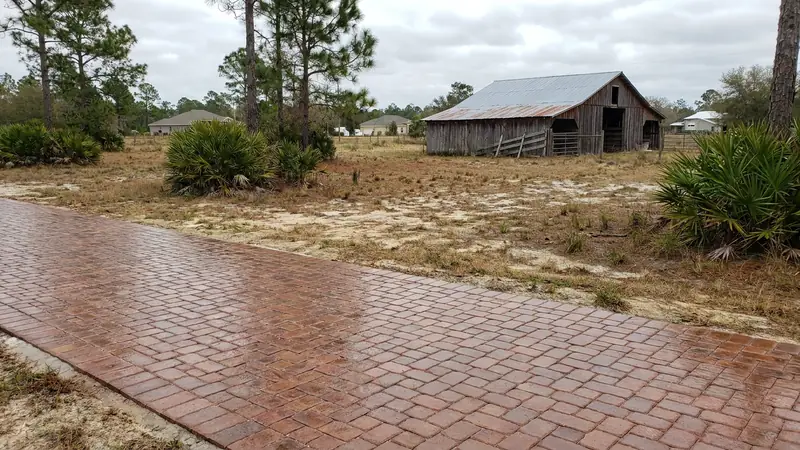
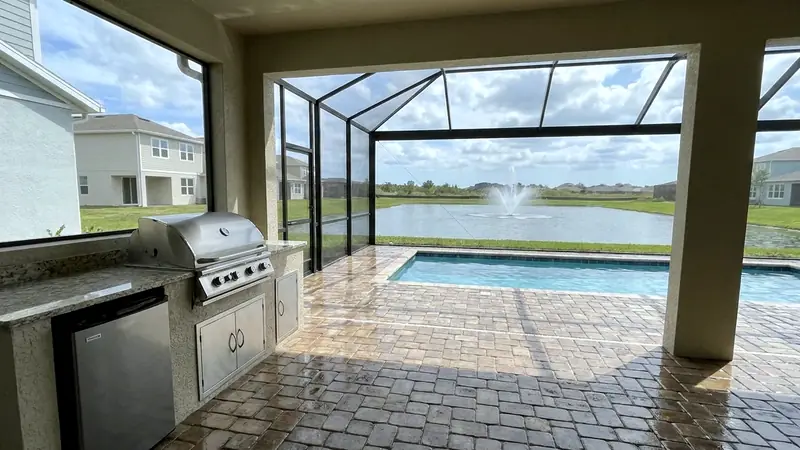
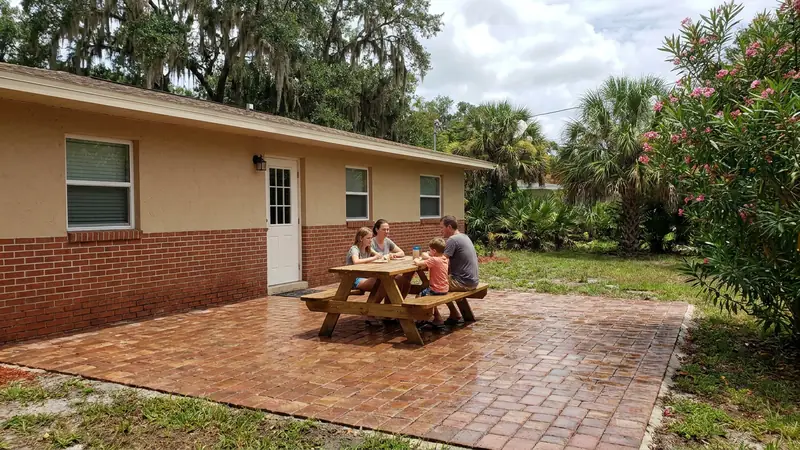
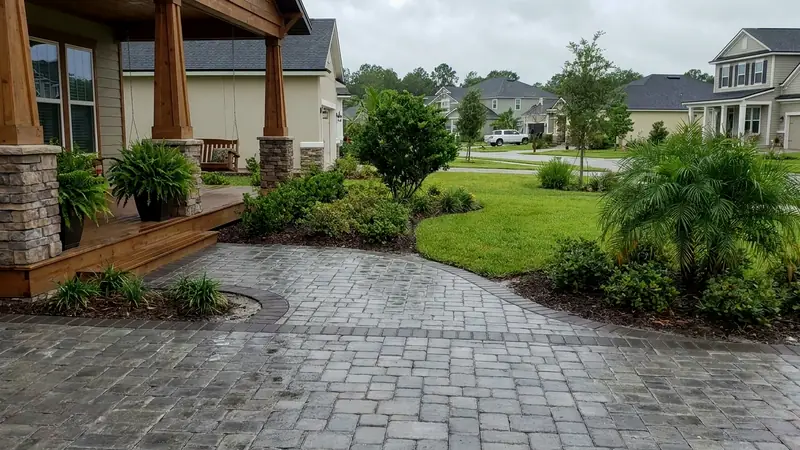
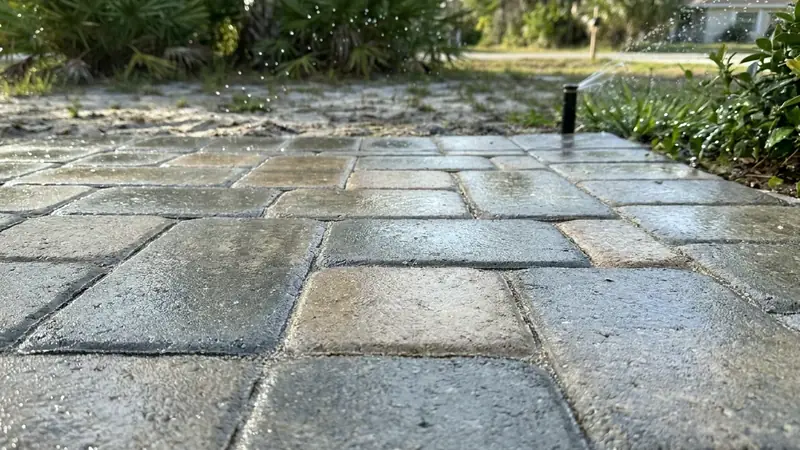
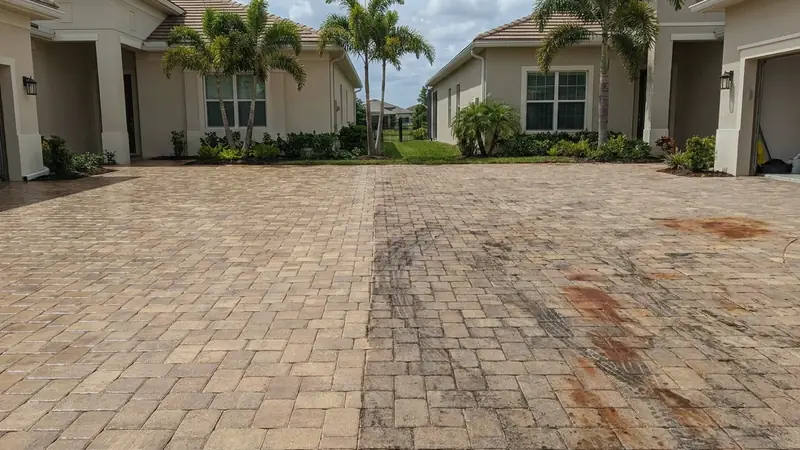
What do sealed pavers look like around Argyle Forest?
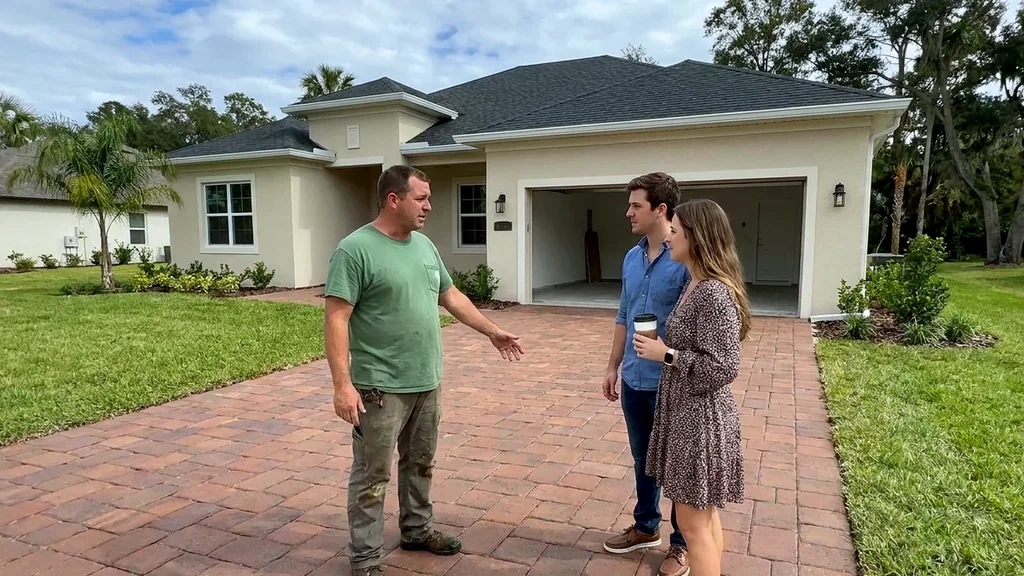
Why local matters in Argyle Forest
A contractor who works the Westside knows Argyle Forest as a collection of planned villages, each with its own HOA and builder history. That helps with questions about the finish and the paperwork. A contractor from outside the area may not think to ask. To talk to a contractor who works these villages, call (904) 299-8891.
Local experience also covers the ground. Wet, sandy soil on the flats sends water to the low spots, and pavers settle there first. A familiar contractor checks those spots before any sealer goes on. When you ask for a free estimate, mention where water stands on your property.
Pool decks are common here, and they need traction as well as color. A contractor who has done many knows to talk about product type early. That avoids a slick surface later. Ask about it when you call (904) 299-8891.
Which Argyle Forest landmarks can I name when I call?
Argyle Forest Park at 8533 Acanthus Drive is a good one. The developer built it in Argyle East Village and donated the land to the Argyle Athletic Association in 1988, and much of it went to the City in 1994. Argyle Forest Boulevard grew from two lanes to four in two phases, finished in 2005 and 2007. Pick the closest and mention it when you ask for a free estimate.
The Argyle Branch library sits at 7973 Old Middleburg Road South, and Blanding Boulevard and Branan Field-Chaffee Road bound the area. The original Villages of Argyle plan covered 8,022 acres, with nearly 10,000 homes in six villages. Give the contractor your village or cross street when you call (904) 299-8891.
Frequently Asked Questions
Do pavers in Argyle Forest need a sealer coat?
Yes. Sealer cuts back weeds and ants, according to one Jacksonville company, and it stabilizes joint sand so storms move less of it. Pool decks and drives in Argyle Forest take sun and splash, which is hard on bare stone. The contractor can check whether yours are due.
Why is paver sealing so expensive in Argyle Forest?
Most of the price buys time, not product. Hours go into washing, re-sanding and drying before a coat can go on, and pool surrounds with steps and borders add more. Smaller jobs cost more per foot since that prep does not shrink with the surface.
What is the biggest industry in Jacksonville, and does it matter for paver sealing in Argyle Forest?
No single industry stands out, since Wikipedia calls the economy balanced among distribution, financial services, biomedical technology, manufacturing, insurance and others. That has no effect on how pavers are sealed. What matters is soil, shade and sun, and a local contractor handles those.
What major companies are in Jacksonville, and does a big company seal pavers in Argyle Forest?
Jacksonville's major employers work in banking, insurance, healthcare and logistics, according to Wikipedia. Those are not paver companies. A local contractor does the sealing, and you can request a free estimate with no obligation.
How much does it cost to seal pavers in Argyle Forest?
Prices are quoted per square foot, and companies around Northeast Florida post $1.75 to $3.25 for cleaning, sanding and sealing. A condo walk runs higher per foot, while a drive plus pool deck earns a better rate. Ask for the total footage on the quote.
Which sealer type suits an Argyle Forest pool deck?
Traction decides it. Penetrating sealers hold grip when the deck is wet, which is why most Jacksonville pool decks get one, while film-forming types can trap moisture and turn slick. Tell the contractor about the pool and any slip worries.
Do I need HOA approval to seal pavers in Argyle Forest?
Possibly, if your community has published guidelines. State law holds an association to what its declaration or guidelines state or reasonably imply. A natural-look sealer can count as routine upkeep, and a high-gloss finish is the likelier one to need sign-off.
What is the difference between film-forming and penetrating sealer?
A paver product maker says topical film-forming sealers are the bulk of the market and penetrating sealers add no gloss. A Jacksonville cost guide says film-forming ones can trap moisture and create slip hazards, so most pool decks get a penetrating type. Either can be water-based or solvent-based.
Do pavers near a lake need extra washing before sealing?
Often, yes. Algae thrive in wet conditions and grow faster in shady spots with poor air circulation, and some Plum Tree homesites back onto small internal lakes. A shaded paver walk near the water may need a second pass. Mention the lake when you request an estimate.
Are condo walkways sealed differently from single-family drives?
The steps are the same, but access and size differ. A Jacksonville paver page says gates and shared areas can limit contractor access, and a cost guide says smaller jobs cost more per foot. Ask your association about work hours and approvals before the visit.
Does a high water table affect my Argyle Forest pavers?
It can. The USDA says the Pottsburg series, first described in Duval County, can have a seasonal high water table 0 to 24 inches deep. That is county soil, not an Argyle Forest survey. Wet ground lets pavers settle, so sunken areas are reset before sealing.
How old are the pavers in Argyle Forest likely to be?
The tax roll shows homes built from 1981 to 2003 with a median around 1990, and Chimney Lakes dates from 1986 to 2005. Pavers were added later by builders and owners, so ages vary. Dig out receipts or ask the HOA what was done before you request an estimate.
Ready for a Free Estimate in Argyle Forest?
Call (904) 299-8891 and tell us about your pavers.
Free, no obligation